
We use it almost without thinking. It closes our dresses, jackets, boots, handbags and jeans in seconds. Yet behind the humble zipper is a surprisingly long story of invention, failure and reinvention.
So, who actually invented the zipper?
There isn’t one simple answer. Several inventors contributed to its development, but Whitcomb L. Judson created an important early commercially marketed version, while Gideon Sundback later developed the design that became the foundation of the modern zipper.
It is a story that proves some of fashion’s most influential innovations aren’t always created by fashion designers.
Discover more stories from the world of style in First Avenue Magazine’s Fashion section.
Before the Zipper
For centuries, clothing depended on buttons, hooks, clasps and laces.
An early attempt to change this came from Elias Howe, the American inventor associated with the sewing machine. In 1851, Howe patented what he called an “Automatic, Continuous Clothing Closure.” However, he did not seriously commercialise the idea.
The story then moved forward more than four decades later.
Whitcomb Judson’s Big Idea
American inventor Whitcomb L. Judson wanted to create a faster alternative to cumbersome boot laces.
In 1893, he patented his “clasp-locker,” a mechanical fastening device intended particularly for shoes. He demonstrated the idea at the Chicago World’s Fair that same year.
There was one significant problem: it wasn’t particularly reliable.
The device could jam or come apart, meaning Judson’s invention wasn’t yet the smooth, simple zipper we recognise today.
Nevertheless, his idea represented an important step towards it.
For more stories exploring how everyday objects became fashion essentials, visit First Avenue’s Lifestyle section.
Gideon Sundback Perfects the Idea
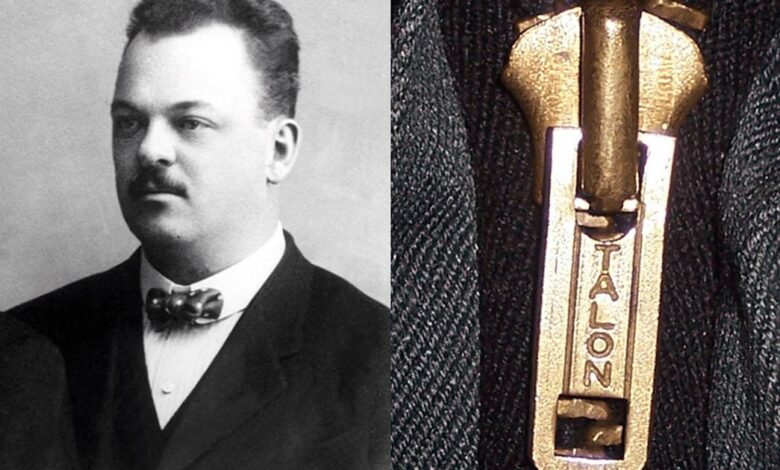
The crucial breakthrough came from Gideon Sundback, a Swedish-born engineer working in the United States.
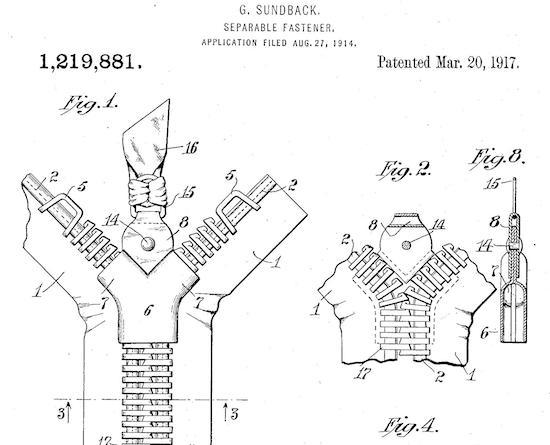
Sundback dramatically improved earlier designs by increasing the number of fastening elements and developing opposing rows of small interlocking teeth that could be joined using a slider.
By around 1913–1914, his improved system had established the basic principle of the modern zipper. His separable-fastener patent was granted in the United States in 1917.
Sundback also developed machinery that helped make zipper production commercially practical.
In other words, Judson helped introduce the concept, but Sundback transformed it into a practical modern fastener.
But Who Called It a “Zipper”?
Interestingly, Sundback didn’t give the invention the famous name we use today.
The word “zipper” became associated with the fastener through the B.F. Goodrich Company, which used it on rubber boots during the 1920s. The catchy name was inspired by the fastener’s distinctive “zip” action and sound.
The name stuck.
When Did Zippers Enter Fashion?
Even after the technology improved, buttons remained deeply established in clothing.
The zipper gradually found uses in boots, bags and military equipment before becoming increasingly accepted by the fashion industry.
By the 1930s, zippers were making a significant move into mainstream clothing, including men’s trousers, and fashion designers increasingly recognised the convenience of the new fastening system.
From there, there was no turning back.
Explore today’s evolving trends through First Avenue’s Designer Spotlight and Style Crushing sections.
A Tiny Invention With a Huge Legacy
Today, the zipper appears everywhere from haute couture and evening dresses to luxury handbags, leather boots, denim and luggage.
Designers have even transformed it from something intended to remain hidden into a visible decorative feature.
And yet every time we pull a zipper closed, we’re using the result of more than half a century of experimentation.
So, who invented the zipper?
Whitcomb Judson deserves recognition for pioneering the commercially marketed clasp-locker, but Gideon Sundback’s engineering improvements created the practical design that evolved into the modern zipper.
Sometimes the inventions that change fashion most are the ones we barely notice.
Discover more fashion, beauty and luxury stories at First Avenue Magazine.