
Today, high heels are synonymous with women’s fashion, red-carpet glamour and luxury. From elegant pumps to dramatic stilettos, heels have become one of fashion’s most recognisable accessories.
But their history contains a surprising twist: high heels were not originally created for women.
In fact, their earliest known predecessors were associated with men, horses and the battlefield.
For more stories celebrating the evolution of style, explore the First Avenue Fashion section.
Were High Heels Invented by Men?
There is no single person who can accurately be called the inventor of the high heel.
According to the Bata Shoe Museum, the precise origin of the heel remains uncertain, but heeled footwear existed in Western Asia centuries before it appeared in Western European fashion.
Historical evidence connects early heels particularly strongly with Persian horsemen. As far back as around the 10th century, heels were used with riding footwear to help riders secure their feet in stirrups. This gave mounted soldiers greater stability, particularly when standing in their stirrups while using a bow and arrow.
What began as something practical would eventually become something completely different: a fashion statement.
How High Heels Reached Europe
By the turn of the 17th century, European interest in Persia was growing through diplomacy, politics and trade.
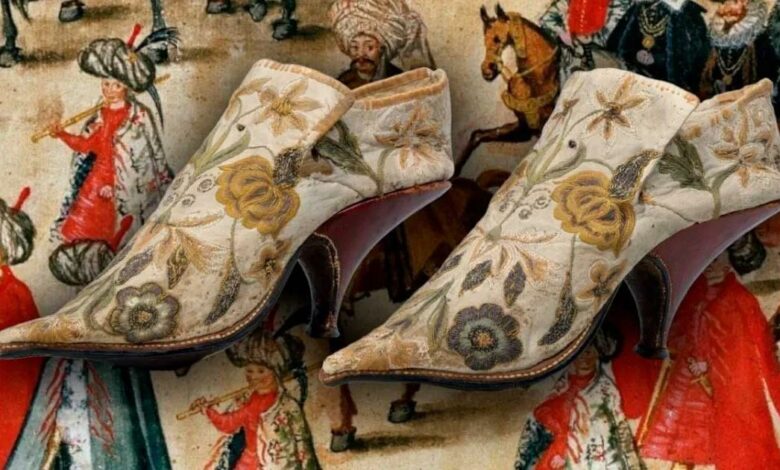
Persian riding footwear attracted attention, and European aristocratic men began adopting heels. Rather than being considered feminine, heels became associated with masculinity, military prestige, wealth and social position.
This was fashion communicating status centuries before designer logos and luxury handbags.
For more on how fashion continues to communicate wealth today, read First Avenue’s Quiet Luxury vs Loud Fashion.
When Did Women Start Wearing Heels?
European women subsequently began adopting heels too, partly during a period when elements of men’s wardrobes were entering women’s fashion.
As heels became increasingly decorative, men’s and women’s versions gradually developed different shapes and styles.
One of history’s most famous heel enthusiasts was King Louis XIV of France. At his court, elegant high heels — including distinctive red heels — became powerful expressions of privilege and status.
The heel had completed an extraordinary transformation: from functional riding equipment to aristocratic fashion.
From Court Shoes to Stilettos
High heels continued to evolve as fashion changed.
The Victoria and Albert Museum’s extensive shoe collection traces more than 3,000 years of footwear history and demonstrates how heel heights, shapes and materials have repeatedly moved in and out of fashion.
By the 20th century, advances in shoemaking allowed designers to experiment with increasingly slender and dramatic heels.
The stiletto heel emerged as one of the defining footwear silhouettes of the post-war fashion era. The V&A’s historical footwear timeline places the stiletto heel in the early 1960s as part of the continuing evolution of modern shoe design.
From there, heels became inseparable from couture, Hollywood glamour and the red carpet.
Explore more contemporary designer style in First Avenue’s Designer Spotlight and Style Crushing sections.
A Fashion Icon That Keeps Changing
Today, high heels exist in almost every imaginable form: pumps, stilettos, platforms, block heels, kitten heels and sculptural designer creations.
Fashion houses continually reinterpret them, but their ability to communicate personality and style remains remarkably similar to their historical role.
What makes their story fascinating is the distance they have travelled culturally.
The high heel did not begin on a fashion runway. It evolved from centuries-old Western Asian riding footwear, became a symbol of male aristocratic power in Europe, entered women’s wardrobes and ultimately emerged as one of the most enduring icons of modern fashion.
For more fashion, beauty and luxury stories, visit First Avenue Magazine.