
How easy is it to be yourself today?
It sounds like it should be easier than ever. We have more choice, more access and more freedom to experiment with how we look.
Yet every time we open social media, there seems to be another aesthetic to follow, another trend gaining momentum, another brand introducing a new standard of what is desirable.
We are encouraged to reinvent ourselves constantly.
And somewhere between trying to look different and trying to fit in, I think we need to ask a much bigger question:
How do you evolve without losing yourself?
Because there can be a cost to constantly trying to keep up. And that cost isn’t always visible.
Sometimes it is the anxiety of wondering whether you look right. Sometimes it is shrinking a part of yourself because it doesn’t seem to belong in the room. Sometimes it is opening a wardrobe full of clothes and strangely feeling that none of them feel like you.
We talk a lot about what fashion gives us. I think we also need to talk about what we can lose when we stop making conscious choices about it.
When clothes meant something
Think about a piece of clothing you have kept for years. Can you associate a memory with it?
Maybe you remember where you wore it, how you felt, who you were with or even the version of yourself you were at that time.
I find this interesting because clothes once had a stronger relationship with memory. We wore things repeatedly. They became part of our stories.
Today, with the speed at which we consume trends and move from one aesthetic to another, are we still giving our clothes enough time to become part of who we are? Or are we simply replacing them before that relationship can form?
Reinventing yourself isn’t wrong. In fact, evolution is necessary.
The problem begins when reinvention becomes constant performance.
When we repeatedly construct ourselves around what is currently admired, expected or rewarded, it can become difficult to recognise which choices are genuinely ours.
You may look confident from the outside while feeling increasingly disconnected from yourself. That disconnect is something I believe deserves more attention in conversations about style, confidence and wellbeing.
We often begin at the wrong end
When we see someone with a strong presence, we notice the finished result: the clothes, the colours, the confidence, the way they carry themselves.
So naturally, we try to recreate the visible part. But what if we worked backwards? What created that confidence in the first place?
This is where Identity Styling begins for me. It is about discovering the identity that shapes the presence, rather than creating the appearance first and expecting confidence to follow.
And the starting point is surprisingly simple: self-awareness.
Self-awareness gives you something no trend, fashion brand or social-media algorithm can give you: an understanding of yourself.
What do I value? What makes me comfortable? What parts of myself do I want to express? What am I trying to communicate in this particular environment? What am I wearing because I genuinely connect with it, and what am I wearing because I have been repeatedly told that I should?
Once you understand those things, style becomes less about copying an outcome and more about creating alignment.
There is no fixed version of you
This doesn’t mean finding one aesthetic and remaining loyal to it forever. That would defeat the purpose.
There may be days when your presence needs to feel approachable. There may be environments where you want to express creativity. At another moment, you may want greater authority, softness or simplicity.
The expression can change. The important question is whether it still belongs to you.
That is why I believe personal style should have room to evolve without becoming disconnected from identity.
Perhaps this is where our definition of luxury is changing too.
Luxury isn’t only about what we can afford to wear.
In a world constantly competing for our attention and telling us what to become, there is a different kind of luxury in knowing yourself well enough to decide what you don’t need to become.
For me, that is the foundation of Identity Styling:
Identity comes first.
Style becomes its expression.
Presence becomes its impact.Because ultimately:
“The identity you own today is the presence the world remembers tomorrow.”
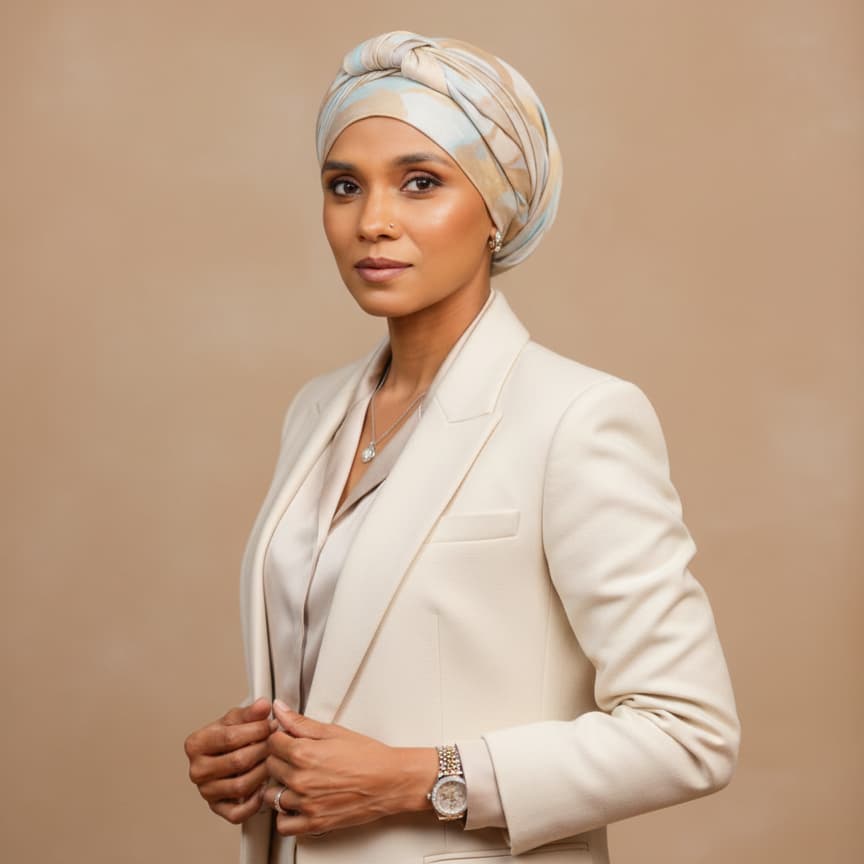
By Rehma Mirza