Who Created the World’s First Little Black Dress?
Coco Chanel Turned a Simple Black Dress Into a Fashion Icon

Few pieces of clothing have remained as timeless as the Little Black Dress. Elegant, simple and endlessly adaptable, the LBD has been worn by everyone from Hollywood legends to royalty and modern red-carpet stars.
But where did it begin?
The answer leads us to Paris in the 1920s and one of the most influential designers in fashion history: Gabrielle “Coco” Chanel.
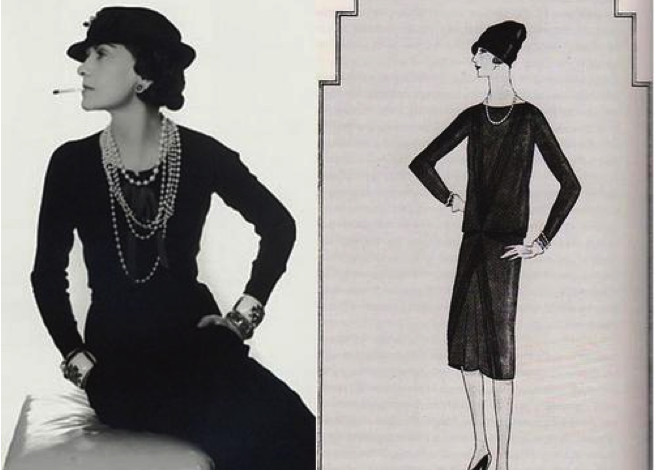
Although women had worn black dresses long before Chanel, black was traditionally associated with mourning, uniforms and service clothing. Chanel helped transform that perception, presenting black as modern, sophisticated and fashionable. The Victoria and Albert Museum notes that Chanel was already promoting black as a stylish and versatile choice by the late 1910s.
The defining moment arrived in 1926, when American Vogue published an illustration of a simple black Chanel dress. Made from crêpe de chine, the design featured long sleeves, a straight silhouette and a hemline below the knee.
Vogue famously compared the design to the Ford Model T, suggesting it could become similarly universal.
That prediction proved remarkably accurate.
Discover more stories celebrating iconic designers and timeless style in First Avenue Fashion.
From Mourning Colour to a Symbol of Elegance
What made Chanel’s dress revolutionary was its simplicity.
Fashion during earlier periods could be highly decorative, elaborate and restrictive. Chanel instead championed cleaner silhouettes and clothing that allowed women greater freedom of movement.
Her black dress reflected this philosophy.
It could be worn during the day and transformed for the evening with jewellery and accessories. The Metropolitan Museum of Art describes the Little Black Dress as becoming a minimalist canvas for everything from hats and gloves to handbags and costume jewellery.
The concept also reflected the changing role of women during the 1920s. Fashion was becoming less restrictive as women embraced shorter hairstyles, more practical clothing and increasingly independent lifestyles.
Chanel understood this cultural shift.
Rather than treating black as sombre, she helped make it chic.
Hollywood Made the Little Black Dress Legendary
Chanel may have established the modern LBD, but cinema helped turn it into a global fashion phenomenon.
One of its most unforgettable moments came in 1961, when Audrey Hepburn appeared in Breakfast at Tiffany’s wearing an elegant black dress created by Hubert de Givenchy.
The image of Hepburn as Holly Golightly—black dress, pearls, gloves and oversized sunglasses—became one of the most recognisable fashion images of the twentieth century.
The LBD continued to evolve through designers including Christian Dior, Yves Saint Laurent and generations of contemporary fashion houses.
Explore more unforgettable celebrity looks in Celebrity Style and discover iconic fashion appearances in Red Carpet.
Why the Little Black Dress Is Still Relevant
Almost 100 years after Chanel’s famous 1926 design, the Little Black Dress remains a wardrobe essential.
Its strength is its versatility. A minimalist black dress can appear understated during the day, sophisticated at dinner and glamorous on the red carpet simply by changing shoes, jewellery and accessories.
The silhouette has changed repeatedly, but the idea behind it has survived.
Mini or floor-length, fitted or oversized, minimalist or embellished—the Little Black Dress continues to be reinvented while retaining the simplicity that made Chanel’s interpretation revolutionary.
What began in Paris became a universal language of style.
You May Also Like: Discover more stories about the personalities who shaped fashion in First Avenue Cover Story.