7 Blush Tricks for a Perfect Glow
Are You Applying Blush Wrong? The Placement Tricks That Can Transform Your Face

From Lifted Cheekbones to a Natural Flush, Where You Apply Blush Changes Everything
Blush has officially moved beyond being the final touch in a makeup routine. In 2026, it has become one of the products that can define the entire face.
The difference isn’t simply whether you choose pink, peach or berry. Where you place your blush can dramatically change the appearance of your features.
Applied high on the cheekbones, blush can create a more lifted effect. Concentrated on the apples, it produces a softer, youthful flush. Swept gently across the cheeks and nose, it can recreate that fresh-from-the-sun look that continues to influence summer beauty.
So, which technique should you use?
For a Lifted Look: Go Higher
If your goal is to visually lift the face, forget placing all your blush directly on the apples of your cheeks.
Instead, apply a small amount toward the upper cheekbone and blend diagonally toward the temples.
High blush placement is one of the techniques gaining attention in 2026 because it introduces colour while creating definition without relying heavily on traditional contour.
The key is blending. There should be no obvious line between the blush and surrounding complexion.
For a Youthful Flush: Focus on the Apples
There’s a reason the classic technique has survived for generations.
Smile gently and identify the fuller area of your cheeks. Apply a small amount of blush there before diffusing the edges outward.
This creates a soft, naturally flushed appearance.
But avoid taking too much colour toward the nose if your objective is definition. Keeping the pigment concentrated on the cheeks can make the result feel fresher and more controlled.
For the Sun-Kissed Look: Cheeks and Nose
Want your makeup to look as though you’ve just returned from a summer holiday?
Sweep a sheer layer of blush across the cheeks and lightly over the bridge of the nose.
The technique mimics the areas where the sun naturally creates colour and has become part of the wider sun-kissed beauty aesthetic.
Peach, coral and warm rose shades work particularly well for this effect.
You May Also Like: Discover more makeup, skincare and celebrity beauty stories in the First Avenue Beauty section.
Powder, Cream or Liquid?
Placement is only half the story. Texture can completely change the finish.
Powder blush offers control and can work particularly well when you want a polished or more matte finish.
Cream blush melts into the complexion and is ideal for creating a soft, skin-like effect.
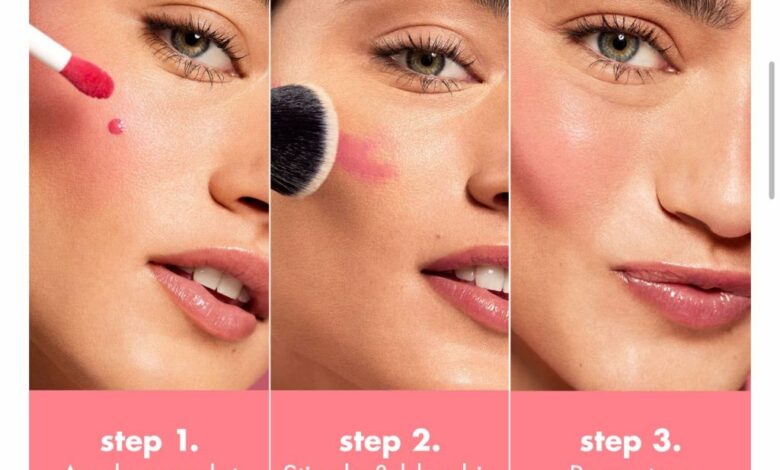
Liquid blush can provide sheer-to-intense colour depending on the formula, but start carefully—a tiny amount can sometimes be enough.
Blush formulas have expanded dramatically, with creams, gels, liquids, stains and hybrid textures now sitting alongside traditional powders.
The 2026 Technique: Blush Tailoring
One of beauty’s latest conversations is blush tailoring.
Rather than following one universal placement rule or selecting a shade simply because it is trending, the idea is to customise blush to your complexion and desired effect.
Vogue recently highlighted the technique as a way of finding a more natural-looking flush by tailoring colour to the individual.
It reflects a bigger change in makeup: beauty is becoming less about rigid rules and more about understanding what works for your own face.
Don’t Forget the Most Important Rule
Whatever technique you choose, start with less product than you think you need.
It is much easier to build another thin layer than to remove an intense patch of pigment.
Blend the edges carefully, check your makeup in natural light and remember that blush should appear connected to your complexion rather than sitting on top of it.
Whether you want sculpted cheekbones, a romantic flush or sun-kissed summer skin, the right placement can transform the result.
In 2026, the question isn’t simply which blush are you wearing?
It’s where are you putting it?
Read Next: Explore more beauty, makeup, skincare and celebrity trends on First Avenue Magazine.