How Diane von Furstenberg Turned a Simple Idea Into a Fashion Revolution
The Dress That Changed Everything:

Some fashion designs are remembered for a season. Others change the way women dress for generations.
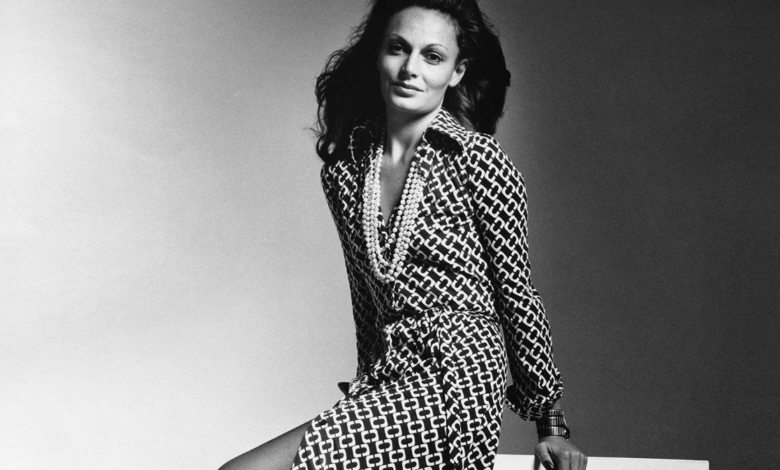
In 1974, a young designer named Diane von Furstenberg introduced a dress that appeared almost surprisingly simple. It wrapped around the body, tied at the waist and required no complicated fastening.
There were no elaborate buttons, rigid structures or uncomfortable details
Yet that uncomplicated design became one of the most influential garments in modern fashion history.
The wrap dress was more than a commercial success. It arrived at a moment when women’s lives, ambitions and expectations were changing — and it offered clothing that moved with them.
A Young Designer With a Different Vision
Born in Belgium in 1946, Diane von Furstenberg moved to New York and began establishing herself in the fashion industry during the early 1970s.
At the time, women’s wardrobes were undergoing a transformation.
More women were entering professional environments, challenging traditional expectations and seeking clothing that combined practicality with personal expression.
Von Furstenberg recognised an opportunity.
Rather than designing garments that demanded women adapt to them, she wanted to create clothing that adapted to women’s lives.
The result was a jersey wrap dress with a flattering silhouette, an adjustable waist and a sense of effortless confidence.
It was sophisticated enough for work, comfortable enough for everyday wear and stylish enough for an evening out.
The Dress That Women Made Their Own
The design’s success was extraordinary.
By the middle of the decade, millions of wrap dresses had been sold, turning von Furstenberg into an internationally recognised fashion figure.
Its appeal came partly from its versatility.
The dress could be worn by women of different ages and styled in countless ways. Bold prints made it expressive, while the straightforward construction made it practical.
A woman could wear it to the office, add jewellery for dinner or pair it with simple accessories for a more relaxed appearance.
It was a garment that offered freedom without sacrificing elegance.
That philosophy remains relevant to the changing definition of luxury, something also explored in First Avenue’s UAE & Saudi Arabia Redefine Luxury Fashion and Lifestyle in 2026.
More Than a Fashion Trend
Many designs become popular because they capture a particular moment.
The wrap dress did something more enduring.
It reflected a growing desire among women to define their identities on their own terms.
The garment was feminine without being restrictive, fashionable without requiring elaborate styling, and memorable without relying on excessive decoration.
Its appeal also demonstrated that simplicity could be a powerful design statement.
Decades later, designers continue to revisit the wrap silhouette, while vintage examples remain desirable among collectors and fashion enthusiasts.
When Fashion Becomes Personal History
A favourite dress can carry memories far beyond the moment it was purchased.
It might be the outfit worn to a first important job interview, a memorable dinner, a family celebration or a milestone in someone’s life.
This emotional relationship with clothing helps explain why certain designs endure.
As First Avenue discusses in How to Stay Consistent with Wellness and Self-Care in Dubai Life, developing a lifestyle that genuinely works for the individual can be more rewarding than constantly chasing external expectations.
The same principle applies to fashion.
Clothing becomes more meaningful when it supports confidence rather than demanding conformity.
A Legacy That Still Inspires
More than fifty years after its introduction, the wrap dress remains closely associated with Diane von Furstenberg’s name.
Its enduring influence demonstrates that a revolutionary fashion idea does not need to be complicated.
Sometimes, the most powerful innovation is a design that makes everyday life easier while helping people feel more confident.
The wrap dress did exactly that.
It was never simply about fabric tied at the waist.
It was about giving women another way to express who they wanted to be.
And that is why one simple dress became a fashion legend.