

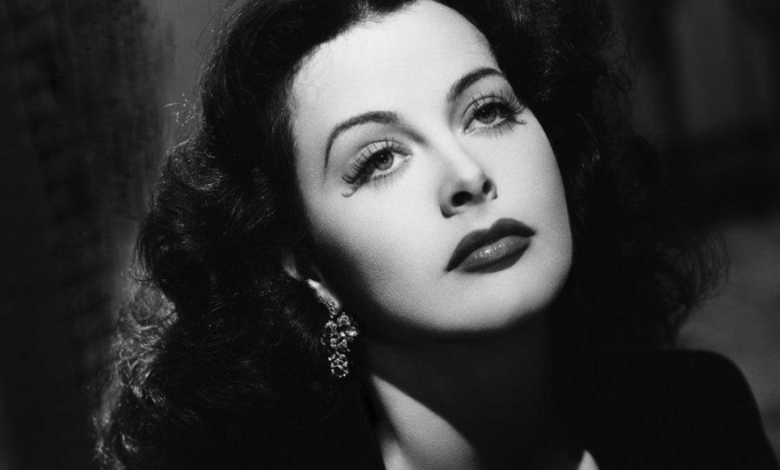
She was once described as one of the most beautiful women in the world. Her face appeared on cinema screens, magazine covers and glamorous Hollywood publicity photographs.
She was once described as one of the most beautiful women in the world. Her face appeared on cinema screens, magazine covers and glamorous Hollywood publicity photographs.
But behind the beauty of Hedy Lamarr was a brilliant, inventive mind that few people recognised.
While audiences admired her elegance and screen presence, Lamarr was quietly working on an invention that would eventually influence modern wireless communication.
The most surprising part?
She developed the idea during World War II, not to create a consumer gadget, but to help protect military communications from enemy interference.
The Woman Hollywood Saw Only as Beautiful
Born in Vienna, Austria, Hedy Lamarr grew up fascinated by the way things worked.
Her father encouraged her curiosity, often explaining the mechanics of machines and everyday technology.
As a young woman, however, it was her beauty and acting talent that attracted public attention.
After establishing herself in European cinema, she moved to Hollywood, where she became one of the most glamorous stars of the Golden Age.
Her performances in films such as Algiers and Samson and Delilah made her internationally famous.
Yet Lamarr had interests that extended far beyond acting.
While other Hollywood personalities attended glamorous social gatherings, she often spent her free time studying engineering problems and experimenting with inventions.
The Secret Life Behind the Hollywood Glamour
Lamarr did not have a formal engineering degree, but she possessed a remarkable talent for understanding technical problems.
She kept an area at home where she could sketch ideas, examine mechanical concepts and develop possible inventions.
Her interests ranged from everyday household improvements to more ambitious technological projects.
During World War II, she became increasingly concerned about the vulnerability of radio-controlled weapons.
Enemy forces could interfere with radio signals, potentially preventing a guided torpedo from reaching its target.
Lamarr began wondering whether a radio signal could be made more difficult to intercept or disrupt.
Her solution would become one of the most fascinating inventions associated with a Hollywood star.
An Unexpected Partnership With a Composer
In 1940, Lamarr met George Antheil, an American composer known for his experimental music.
Despite their different backgrounds, the two shared an interest in creative problem-solving.
Together, they developed an idea known as frequency hopping.
Instead of transmitting information continuously on one radio frequency, their system would rapidly switch between different frequencies in a coordinated sequence.
A transmitter and receiver would change frequencies together, making it more difficult for an outside party to interfere with the communication.
The concept was partly inspired by synchronised player pianos, which could reproduce carefully coordinated musical patterns.
It was an unusual combination of Hollywood creativity, musical engineering and military technology.
The Invention the Military Did Not Immediately Embrace
Lamarr and Antheil received a United States patent for their secret communication system in 1942.
They hoped it could help prevent enemy forces from jamming radio-controlled torpedoes.
However, the United States Navy did not adopt their proposed system during the war.
The invention remained largely overlooked while Lamarr continued her successful film career.
The actress whose beauty attracted international attention had helped develop a serious technical concept, yet her contribution received little public recognition.
For years, most people knew her only as a glamorous Hollywood star.
How Her Idea Became Part of Modern Technology
Decades later, frequency-hopping techniques became increasingly important in secure and reliable wireless communications.
The principle of changing radio frequencies to reduce interference influenced the development of later communication systems.
Today, frequency hopping is particularly associated with technologies such as Bluetooth, while related spread-spectrum developments have contributed to the broader evolution of wireless communications.
Although Lamarr did not single-handedly invent Wi-Fi or Bluetooth, her work with Antheil is recognised as an important contribution to the history of wireless technology.
The contrast is extraordinary.
An actress celebrated for her appearance had also helped develop a concept that would influence technologies used by millions of people.
Recognition Came Much Later
For much of her life, Lamarr’s achievements as an inventor remained overshadowed by her film career.
That began to change as historians and engineers revisited her work.
In 1997, she received the Electronic Frontier Foundation Pioneer Award in recognition of her contribution to communication technology.
She was later inducted into the National Inventors Hall of Fame in 2014, more than a decade after her death.
Her story gradually became an inspiration to women interested in science, engineering and innovation.
It also challenged the assumption that creativity in the arts and scientific intelligence belong to separate worlds.
More Than a Beautiful Face
Hedy Lamarr died in 2000, leaving behind a remarkable legacy.
She was a Hollywood icon, an international beauty and a woman whose technical imagination extended far beyond the expectations placed upon her.
Her life reveals how easily intelligence and talent can be overlooked when society focuses too heavily on appearance.
The actress who captivated audiences with her beauty also possessed the curiosity to imagine a new way of communicating.
And perhaps that is the most powerful lesson of her story.
The world admired Hedy Lamarr for how she looked. History would eventually recognise her for how she thought.